
Selling precious metals can mean two very different things: exchanging silver for gold while staying invested in bullion, or selling for cash to fund another asset. I plan for both. My objective is to make decisions against a clear purpose rather than assume I can identify the exact market top.
My first exit is a possible move from silver to gold
If the gold-to-silver ratio falls to around 50, I intend to exchange some silver back into gold. If it falls to 20, I would expect to exchange most of my silver into gold. These are intentions, not automatic orders or promises about future prices. The amount and execution would still depend on costs, tax and my circumstances at the time.
This complements my rules for new purchases, but it is not the same rule. A buying allocation governs additional money; an exchange decision changes an existing holding. I do not need to sell everything simply because a single threshold is reached.
Why I track purchasing power as well as currency value
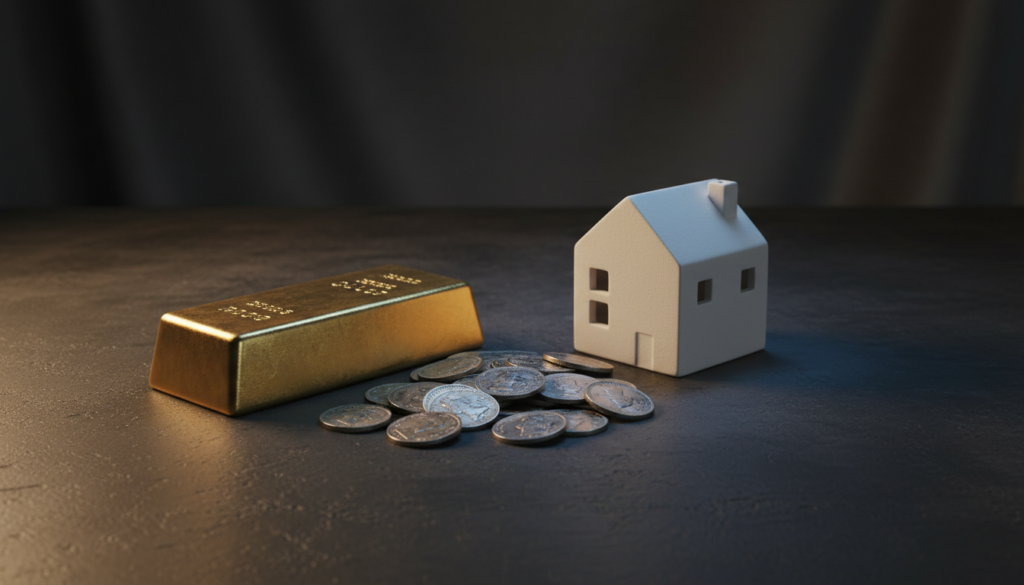
For someone saving towards a property, the useful comparison is not only how many dollars their metal is worth. It is also what the intended property costs, how much liquid cash is needed and what remains after all transaction costs. A gain in metal prices is less useful if the target asset has increased by even more.
I therefore want to compare net sale proceeds with a real alternative purchase. A property budget must allow for local purchase taxes, legal work, finance, repairs, insurance and a cash reserve. Metal valuation and property valuation should refer to the same currency and reasonably aligned dates.
My crisis scenario and property plan
My personal expectation is a severe economic crisis that could put pressure on shares and property. I think gold and silver could initially fall in a rush for liquidity and later rise strongly. If that happens while property becomes attractive to me, I would consider selling metals and moving capital into housing.
That sequence may not happen. Property may remain expensive, metals may fail to rise, or both may fall for longer than I expect. Different countries can also behave very differently. This page explains my investment thesis, not an assured opportunity or a prediction that a reader should act on.
A practical checklist before a sale
- Request the actual bid or buyback quote for your specific holding, rather than multiplying ounces by a spot chart.
- Subtract dealing fees, currency conversion, transport or assay costs and expected taxes to estimate usable cash.
- Confirm when settlement occurs and which bank account can receive proceeds.
- For physical bullion, agree the insured transport and authentication process before sending metal.
- If buying property, check the purchase timetable and liquidity needs before making an irreversible commitment.
Selling in stages
One possible way to reduce dependence on a perfect exit date is to sell or exchange in stages. That can spread timing risk, although it can also increase transaction costs and leave you with less exposure if the market continues rising. The appropriate approach depends on the purpose of the money and the minimum trade sizes.
Keep the decision evidence
Keep invoices and trade records in the relevant currencies, including acquisition and disposal dates and fees. A sale for cash and a direct exchange can both have reporting implications depending on your country. Check the rules applicable to you rather than assuming that no money entering a bank means no taxable transaction. For preparation, use the spot reference, the provider comparison and the purchase and exit guide.